
Online Elementary School: Grades K-5
Students are invited to a variety of sessions throughout the week. Each week begins with a School Events session on Monday mornings. During this time various elementary staff and students get together for relationship and team building activities, read-alouds, tech tips, career cruising, character education, and various school events.
Students may also be invited to a session in the afternoons where they will participate in progress monitoring, small group, science or social studies lessons, or a 1:1. These sessions are a time for the teacher to gather academic data on a variety of learning skills. Teachers track this academic data throughout the year to ensure students are proficient with skills by the end of the school year. Small group time is set aside for students to work on needed skills with his or her teacher alongside a few fellow students. 1:1’s are targeted time for a teacher and student to work on a specific skill. These required sessions are targeted based on grade level, skills, and needs. If a student cannot attend, it’s important to communicate with the teacher prior to the lesson. Work from any unattended session is still expected to be completed.
Every Tuesday and Wednesday students will have a required, synchronous live session with their classmates and teacher. During this time students will learn key concepts from their math and language arts courses. It is important that students attend live sessions. These sessions are required. Attendance and engagement is graded. Students are able to access all of their curriculum in their online portal, but Michigan Online School requires students to attend the live sessions offered to enhance the online learning, support students’ skillwork, and to build relationships.
Outside of live sessions, students complete asynchronous work in courses. This means they log into each of their courses and complete the work assigned to them each day. If a student is struggling, he or she should reach out to a teacher and ask for help. Families get to choose what subjects they work on, in what order each day as long as all assigned work is completed and attendance expectations are met. This is where the flexibility of an asynchronous school shines! Great learning does not solely exist within the walls of a classroom, behind the doors of an office, or in front of a computer screen. We encourage families to explore what greatness lies ahead of them on this unique path of learning!



 |
Semester 1 Language Arts K |
Semester 2
Language Arts K |
 |
Semester 1 Language Arts 1 |
Semester 2
Language Arts 1 |
 |
Semester 1 Language Arts 2 |
Semester 2
Language Arts 2 |
 |
Semester 1 Language Arts 3 |
Semester 2
Language Arts 3 |
 |
Semester 1 Language Arts 4 |
Semester 2
Language Arts 4 |
 |
Semester 1 Language Arts 5 |
Semester 2
Language Arts 5 |
CURRICULUM PROVIDERS
Our school uses high-quality, research-based curriculum and intervention programs to ensure all students receive strong instruction and targeted support.
For grades K–5, instruction in English Language Arts, Mathematics, Science, and Social Studies is delivered through the AMP Proprietary Curriculum. The English Language Arts component of this curriculum is based on Amplify Core Knowledge Language Arts (CKLA), a knowledge-building, phonics-based literacy program aligned to the Science of Reading.
To support students who need additional academic assistance, we use a multi-tiered system of supports:
These programs work together to ensure students receive both strong core instruction and the targeted interventions needed to accelerate learning and close skill gaps.
TESTING
All Kindergarten students will complete a universal screener through MindPlay. MindPlay is an Orton-Gillingham based program. The MindPlay universal screening tool provides educators & families with reliable, actionable insights to ensure students can master essential reading skills. Click Here to learn more about MindPlay.
All students, K-5 will complete a diagnostic test in i-Ready in the fall, winter, and spring. i-Ready is an online program for reading and mathematics that will help students’ teachers determine students’ needs, personalize learning, and monitor progress throughout the school year. i-Ready allows teachers to meet your students exactly where they are and provides data to increase students’ learning gains. i-Ready consists of two parts: Diagnostic Assessments and Personalized Instruction. The i-Ready diagnostic is an adaptive assessment that adjusts its questions to suit students’ needs. Each item a student sees is individualized based on answers to the previous questions. For example, a series of correct answers will result in slightly more difficult questions, while a series of incorrect answers will yield slightly easier questions. i-Ready Personalized Instruction provides students with lessons based on individual skill levels and needs, so students can learn at a pace that is just right. These lessons are fun and interactive to keep students engaged as they learn. Click here to learn more about iReady.
Student Screening and Progress Monitoring
Students participate in regular academic screenings to measure progress toward grade-level expectations and to ensure instruction is responsive to their needs. Screenings are conducted through live sessions with teachers as well as within students’ online courses using audio- and video-based assessments.
Our school uses i-Ready Literacy Tasks for academic progress monitoring. These assessments are highly rated by the National Center on Intensive Intervention (NCII), grounded in best practices, and supported by strong research, including alignment with DIBELS® 8th Edition.
In addition to measuring reading progress, our screening system is designed to identify early indicators of dyslexia risk. The combination of phonics-based measures, fluency assessments, and rapid naming tasks allows educators to detect patterns associated with reading difficulties and to provide timely, targeted intervention.
Screening tools are selected by grade level to reflect the developmental stages of reading and literacy acquisition:
Kindergarten
Kindergarten students are assessed using a Letter Naming Fluency screening. Based on results from the i-Ready diagnostic and fluency measures, students may also receive:
Grade 1
First-grade students complete:
Based on combined diagnostic and fluency data, students may also receive:
Grades 2–3
Students in grades 2 and 3 complete a Passage Reading Fluency screening. Based on results from the i-Ready diagnostic and fluency data, students may also receive:
Grades 4–5
Students in grades 4 and 5 are assessed using Passage Reading Fluency measures to monitor reading accuracy, rate, and comprehension.
Together, these assessments allow teachers to monitor progress, identify dyslexia risk, and deliver early, evidence-based instruction and intervention to support every learner’s success.
State Testing
The state of Michigan requires all students in 3rd, 4th, and 5th grades to participate in Michigan state testing. Once each year, all students in Michigan take a high-quality state summative assessment. All of Michigan’s state assessments measure student progress with Michigan’s content standards or other career-or college-readiness goals. The Michigan Student Test of Educational Progress (M-Step) is given online, but in a face-to- face setting.
Why Assess Students?
Student assessment is a hot topic of conversation, with lots of diverse opinions on how, when, how much, with what tests, and for what purpose we assess students. Here are a few important points to keep in mind:
♦ ♦State and federal laws require schools to assess student learning every year in specific grade levels and subjects.
♦ ♦Annual assessments that are the same for all Michigan students give us information on how students are performing, and how well schools and districts are teaching students compared to those in other communities, states, and nations. This helps target supports and resources to students and schools that need them most. It also helps identify areas of success from which others can learn. This information and data are necessary with our goal to be a Top 10 education state.
♦ ♦State standardized assessments do not measure everything important about a student, but they do measure how much a student knows in terms of our state’s content standards.
FIELD TRIPS
Students will be invited to a variety of virtual field trips throughout the school year. Michigan Online School aligns virtual field trips with learning topics.
STAFF
 |
 |
 |
 |
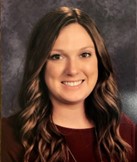
| Principal Terasa Burt (616) 600-4684 tburt@michiganonlineschool.com |
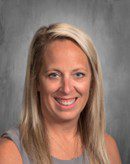
Kindergarten Nicole Porada (269) 256-5659 nporada@michiganonlineschool.com |
First Grade Holly Fahler (248) 230-8197 hfahler@michiganonlineschool.com |
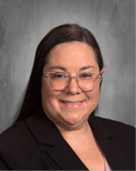
First Grade Megan Kuntz (269) 743-4048 mkuntz@michiganonlineschool.com |
 |
 |
 |
 |
| Second Grade Chelsey Gismonde (269) 743-0109 chgismonde@michiganonlineschool.com |
Second Grade Madison Hetland (269)350-7885 mhetland@michiganonlineschool.com |
Third Grade Nikki DeLaTorre (616) 365-5473 ndelatorre@michiganonlineschool.com |
Fourth Grade Paige Russo (269) 256-6650 prusso@michiganonlineschool.com |
 |
 |
 |
 |
| Fourth Grade Nancy Campanellie (269)348-7226 ncampanellie@michiganonlineschool.com |
Fifth Grade Kim Schultz (269) 400-6452 kschultz@michiganonlineschool.com |
Fifth Grade Mikaila Davis (269) 743-0117 mdavis@michiganonlineschool.com |
Special Education Teacher Megan Myers (269)440-4204 mmyers@michiganonlineschool.com |
 |
 |
 |
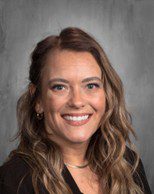 |
| Special Education Teacher Jordan Stroud (269) 400-6507 jstroud@michiganonlineschool.com |
Special Education Teacher Miranda Auer (313) 251-5862 mauer@michiganonlineschool.com |
Literacy Interventionist Jamie Mlinarich (269) 743-5715 jmlinarich@michiganonlineschool.com |
Math Interventionist Kristina Rogers (313) 486-0432 krogers@michiganonlineschool.com |
Request Information
Fill out the form to receive more information about our school.